The people will believe what the media tells them they believe.
Most people don’t understand how much of what they see online is influenced, shaped, or even engineered.
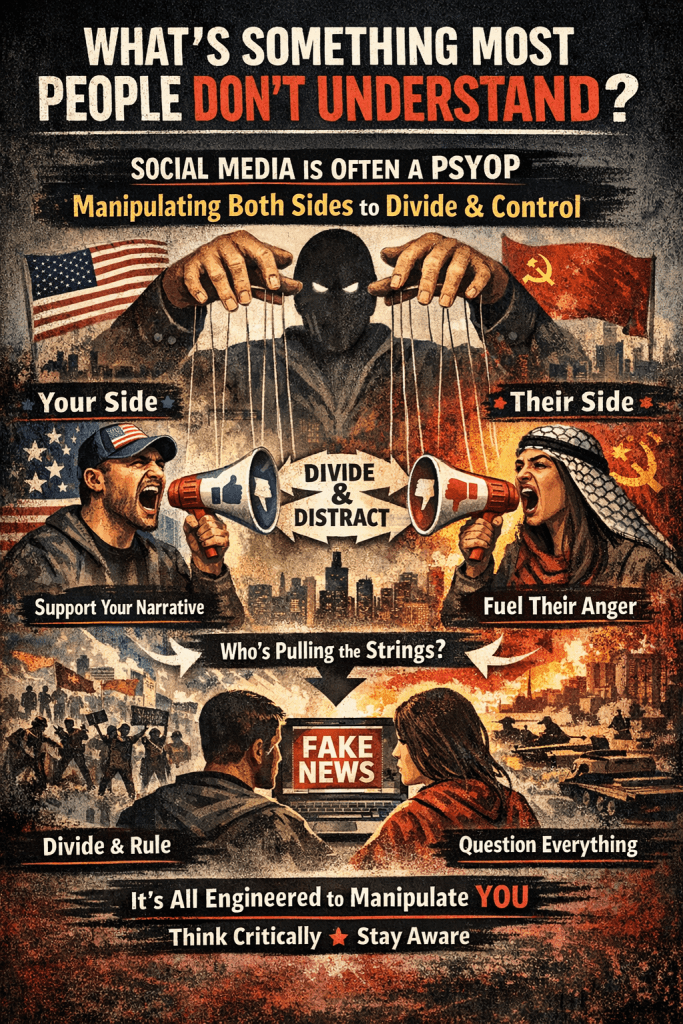
Social media is not just a place for opinions it’s often a battlefield of narratives. What looks like organic support or hate can sometimes be part of larger psychological operations (psyops), especially in geopolitics and politics.
For example, if you already dislike a person, group, or country, it becomes very easy for external actors to amplify that emotion. They may promote voices that align with your beliefs, making you feel validated while simultaneously pushing opposing voices to others. In reality, both sides can be unknowingly reacting to content designed or boosted by the same underlying interests.
This creates division.
It’s a modern version of the classic “divide and rule” strategy not always through direct control, but through influence, perception, and emotional manipulation.
The result? People think they are choosing sides independently, while in many cases, the narrative itself has already been shaped for them.
Understanding this doesn’t mean everything is fake but it does mean we should question what we consume, think critically, and avoid being easily driven by emotional reactions online.
Understanding this gives you an advantage.
It allows you to pause before reacting, question before believing, and observe patterns instead of getting pulled into them.
Bcause in the end, the most effective control is not forcing people what to think
it is shaping what they believe they chose to think.
Think critically. Stay aware.
 Artistic Blog